RFID vs NFC Key Fobs: What Is the Difference and Which Can Be Copied?
You tap your condo fob on the reader every single day without thinking twice about what is actually happening inside it. But the technology embedded in that small plastic tag determines three things that matter a lot to Vancouver residents: whether your fob can be copied, whether you can add it to your phone, and how secure your building actually is.
This guide explains the difference between RFID and NFC key fobs in plain language, covers which type is most common in Vancouver condo buildings, and answers the question that brings most people here: can my fob be copied, and can I put it on my phone?
What Is an RFID Key Fob?
RFID stands for Radio Frequency Identification. It is the technology that powers the majority of condo access fobs in use across Vancouver today.
Here is how it works in simple terms. The reader mounted next to your building entrance continuously emits a low-level radio field. When you hold your fob near that reader, the antenna coil inside the fob absorbs energy from the radio field and uses it to power a tiny chip. That chip broadcasts a unique identification number back to the reader. The reader checks that number against the building access list and either unlocks the door or refuses entry.
The key characteristic of RFID is that it is one-way communication. The fob transmits its ID to the reader and nothing more. There is no battery inside a standard RFID fob. It draws all the power it needs from the reader field each time it is used.
RFID fobs operate at two main frequencies:
Low frequency – 125 kHz. This is the most common frequency in Vancouver condo buildings, particularly in towers built before 2015. Low frequency RFID fobs include types like HID Prox, EM4100, Indala, AWID, and Pyramid. These fobs have no encryption. The chip simply stores a number and broadcasts it when powered by the reader field.
High frequency – 13.56 MHz. This frequency is used by newer and more secure fob systems. It includes MIFARE Classic, MIFARE DESFire, and iClass fobs. These operate in the same frequency band as NFC, which is covered in the next section.
What Is an NFC Key Fob and How Is It Different from RFID?
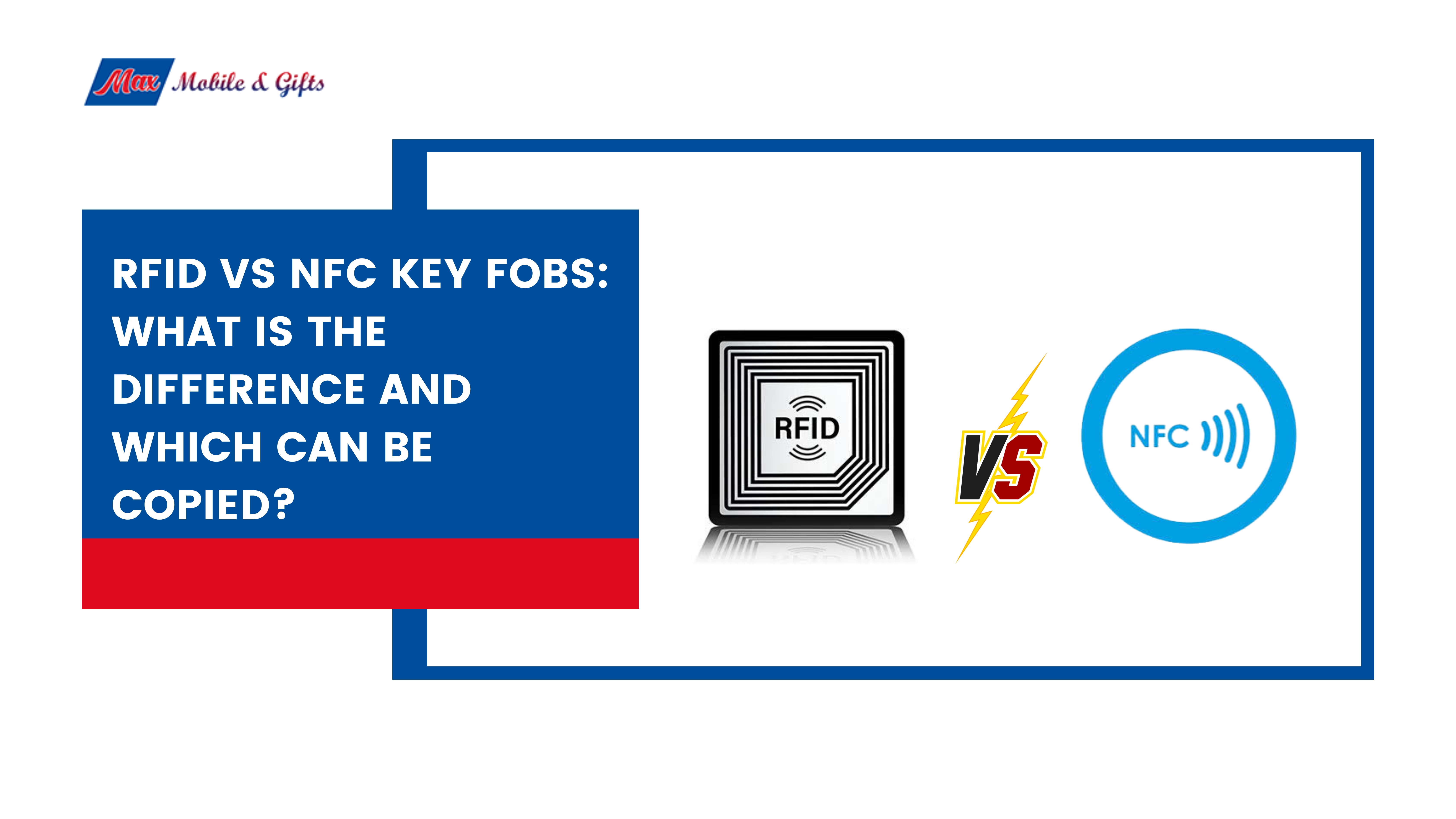
NFC stands for Near Field Communication. The important thing to understand is that NFC is technically a subset of RFID. It operates at 13.56 MHz, the same high frequency band as the newer RFID systems mentioned above. What makes NFC distinct from standard RFID is not the frequency but the communication method.
Standard RFID is one-way. The fob talks to the reader and that is it. NFC enables two-way communication. The reader and the tag can exchange data in both directions. This two-way capability is what allows smartphones to act as both a reader and a tag, and it is what enables more sophisticated security features like challenge-and-response authentication and rolling encryption codes.
NFC fobs operate at a very short range, typically a few centimetres at most. You need to physically tap the fob against the reader rather than simply wave it nearby. This shorter range is a deliberate security feature.
NFC technology is found in newer condo access systems, hotel key cards, transit cards, and the tap-to-pay chip in your credit card. It is also built into every modern iPhone and Android smartphone, which is exactly why so many people wonder whether they can use their phone as a condo fob.
RFID vs NFC: Side-by-Side Comparison
| Feature | Low Frequency RFID (125 kHz) | High Frequency RFID (13.56 MHz) | NFC (13.56 MHz) |
| Frequency | 125 kHz | 13.56 MHz | 13.56 MHz |
| Communication | One-way | One-way | Two-way |
| Range | Up to 10 cm | Up to 10 cm | 1 to 4 cm |
| Encryption | None | Varies by chip type | Advanced on newer systems |
| Common fob types | HID Prox, AWID, Indala, Pyramid | MIFARE Classic, iClass | MIFARE DESFire, iClass SE, SEOS |
| Found in | Older Vancouver condos (pre-2015) | Mid-range condo systems | Newer high-security buildings |
| Phone compatible | No | Sometimes | Yes, with building app |
| Copyable | Yes in most cases | Often yes, depends on encryption | Generally no for advanced types |
Which Type of Fob Is in Most Vancouver Condo Buildings?
The honest answer is that most Vancouver condos, particularly those built before 2015, use 125 kHz low frequency RFID fobs. HID Prox is the most widely deployed access control system in Greater Vancouver residential buildings. AWID, Indala, and Pyramid systems are also common.
Newer buildings constructed from around 2015 onwards are more likely to use 13.56 MHz systems, with MIFARE Classic being the most common mid-tier option and MIFARE DESFire or iClass SE appearing in higher-security installations.
You can often identify what type of fob you have by looking at the markings on the back. HID fobs typically have the HID logo and a series of numbers. AWID, Indala, and Pyramid fobs also carry their brand markings in most cases. If your fob has no visible markings or you are unsure, the fastest way to find out is to bring it into Max Mobile & Gifts at International Village Mall. We scan it with our reader equipment and tell you exactly what type it is and whether it can be copied, at no charge and with no obligation.R
Can Your Condo Fob Be Copied? RFID vs NFC Copyability Explained
Whether your fob can be copied comes down almost entirely to what technology it uses and whether that technology includes encryption.
125 kHz low frequency RFID fobs: copyable in most cases. These fobs store a fixed ID number with no encryption. The number is read from the original fob and written to a blank fob of the same type. Because there is no encryption to work around, the process is straightforward and the copy works identically to the original on the same building readers. HID Prox, AWID, Indala, and Pyramid fobs in this category are the most common type we duplicate at our Vancouver fob copy service.
13.56 MHz RFID with basic security (MIFARE Classic): often copyable. MIFARE Classic fobs use a security layer that has well-documented vulnerabilities. In most condo building configurations, MIFARE Classic fobs can be read and duplicated. However, copyability depends on how the building has configured its system. Some configurations make duplication possible while others add additional protections.
13.56 MHz NFC with advanced encryption (MIFARE DESFire, iClass SE, SEOS): generally not copyable. These systems use AES encryption and rolling security codes that change with each use. The encryption is designed specifically to prevent duplication, and for most practical purposes these fobs cannot be copied by third-party services. If your building uses one of these systems, building management is the only source for additional fobs.
The important point is that the same fob brand can be copyable in one building and not in another, depending on how the access control system has been configured. The only reliable way to know for certain is to have the fob scanned by a professional with the right diagnostic equipment.
At Max Mobile & Gifts, we check every fob before attempting any duplication. If your fob cannot be copied, we tell you immediately and there is no charge for the check.
Can You Copy a Condo Fob to Your Phone?
This is one of the most searched questions about condo fobs in Vancouver, and the answer requires a bit of explanation to be genuinely useful.
iPhones and Android smartphones have NFC chips built in. This leads many people to assume they can simply add their condo fob to their phone the same way they add a credit card to their digital wallet. The reality is more complicated.
The NFC chip in your phone operates at 13.56 MHz only. It cannot transmit or receive at 125 kHz, the frequency used by the vast majority of Vancouver condo fobs including HID Prox, AWID, Indala, and Pyramid systems. This is a fundamental hardware limitation. It is not a software restriction that can be worked around with an app or a setting change. The antenna in your phone is physically incapable of communicating at 125 kHz.
This means that for most Vancouver condo residents, the answer to “can I put my fob on my iPhone or Android phone” is no. Not because of any policy restriction, but because the technology is incompatible at a hardware level.
The exception applies to buildings that use newer 13.56 MHz NFC-based access control systems AND have specifically enabled mobile credential functionality through a dedicated building management app. In these buildings, residents can sometimes use a smartphone app to access the building. This is a building-level decision and capability, not something that can be set up independently.
What you can do instead:
If your fob is compatible for duplication, Max Mobile & Gifts offers three alternative formats that give you the convenience of not carrying a separate keychain fob:
NFC sticker format: A thin adhesive sticker containing the same credentials as your original fob, which you attach to the back of your phone case. When you tap your phone against the reader, the sticker communicates with the reader rather than the phone’s NFC chip. This works with compatible 125 kHz fobs.
Wallet card format: A slim credit-card-sized copy of your fob that fits in your wallet alongside your bank cards. Same technology as the original, different physical form.
Standard keychain fob, the most common format, identical in function to your original fob but on a new blank body.
Which Fob Format Is Right for You?
When getting a fob copy at our Vancouver fob copy service, you can choose the format that suits how you use the fob.
The standard keychain fob is the most straightforward option. It works on every compatible building system, is easy to carry, and is the format most people are already familiar with. This is the right choice for most daily use situations and for spare fobs for family members or roommates.
The wallet card format suits people who carry their fob separately from their keys and prefer to keep it alongside their bank cards and ID. It takes up no extra space and is easy to locate in a wallet.
The NFC sticker is the closest option to having your fob on your phone, without the hardware compatibility limitation. The sticker attaches to the back of your phone case and lets you tap your phone on the reader as if the phone itself were the fob. It is important to note that this only works with compatible fob types and that the sticker, not the phone, is doing the communicating.
If you are not sure which format suits your situation, come into our International Village Mall location and we will recommend the right option based on your fob type and how you plan to use it.
Frequently Asked Questions:
What is the difference between RFID and NFC key fobs?
RFID is a broad technology covering both 125 kHz and 13.56 MHz fobs. NFC is a specific type of RFID at 13.56 MHz that enables two-way communication. Most Vancouver condo fobs are 125 kHz RFID.
Can I copy my condo fob in Vancouver?
Most standard 125 kHz RFID fobs can be copied. Higher-security NFC fobs with advanced encryption generally cannot. Bring your fob to Max Mobile & Gifts at International Village Mall for a free compatibility check.
Why can some fobs be copied but others cannot?
It comes down to encryption. Low frequency 125 kHz fobs have none and copy easily. High frequency NFC fobs with MIFARE DESFire or iClass SE encryption are designed specifically to prevent duplication.
Can I add my condo fob to my iPhone or Android phone?
In most cases no. Standard Vancouver condo fobs use 125 kHz RFID. Phone NFC chips operate at 13.56 MHz only. The two frequencies are incompatible at a hardware level. A phone sticker is the closest practical alternative for compatible fobs.
How do I know if my fob is RFID or NFC?
Check the back for brand markings. HID, AWID, Indala, and Pyramid mean 125 kHz RFID. MIFARE, iClass, or DESFire mean 13.56 MHz. No markings? Bring it in for a free scan.
Where can I get my fob copied near me in Vancouver?
Max Mobile & Gifts at Unit 1183, International Village Mall, 88 West Pender St. Open Monday to Saturday, 10:00 am to 6:00 pm. Walk-ins welcome, no appointment needed.
Is it legal to copy a condo fob in BC?
Yes. Fob duplication is legal under BC law for tenants and property owners copying their own access credential.
Not Sure What Type of Fob You Have? Bring It to Max Mobile & Gifts in Vancouver
You do not need to know whether your fob is RFID or NFC before visiting us. Bring it in and we will scan it, identify the technology, confirm whether it can be copied, and give you a clear answer at no charge before any work begins.
If your fob is compatible, we duplicate it the same day in your choice of keychain, wallet card, or sticker format. If it cannot be copied, you pay nothing.
Max Mobile & Gifts provides professional fob copy service in Vancouver at International Village Mall. We also offer key cutting, cell phone repair, passport and PR photo services, and mobile accessories at the same location.
Walk in today for your free fob compatibility check
Serving condo and apartment residents across Downtown Vancouver, Gastown, Yaletown, Coal Harbour, Chinatown, West End, Burnaby, and surrounding areas.